Published market hub · 2026-05
Detroit, MI: start in ZIP 48205 before you widen the search
Modest cash-flow upside; DSCR read passes at 1.20× but limited appreciation. High gross rent-to-value ratio (~15.5%) suggests attractive cash flow at current price levels. Start in ZIP 48205, where the current setup looks strongest today. Before deeper deal work, check insurance, taxes, and fee load on the actual property.
DSCR quick screen
Use about $1,070/mo as the public first-pass monthly payment ceiling at a 1.20x DSCR read, then pass on deals that need materially more room before taxes, insurance, vacancy, and capex.
- Modest cash-flow upside; DSCR read passes at 1.20× but limited appreciation.
- City rent proxy: $1,283/mo.
- Directional only. Pressure-test the payment range in the calculator before application.
Rough max payment
$1,070/mo
Public directional screen only. Validate against your actual scenario.
Rent proxy
City rent proxy: $1,283/mo
Public city screen derived from the strongest ZIP watch rows.
ZIP lead
ZIP 48205
gross rent to value ratio
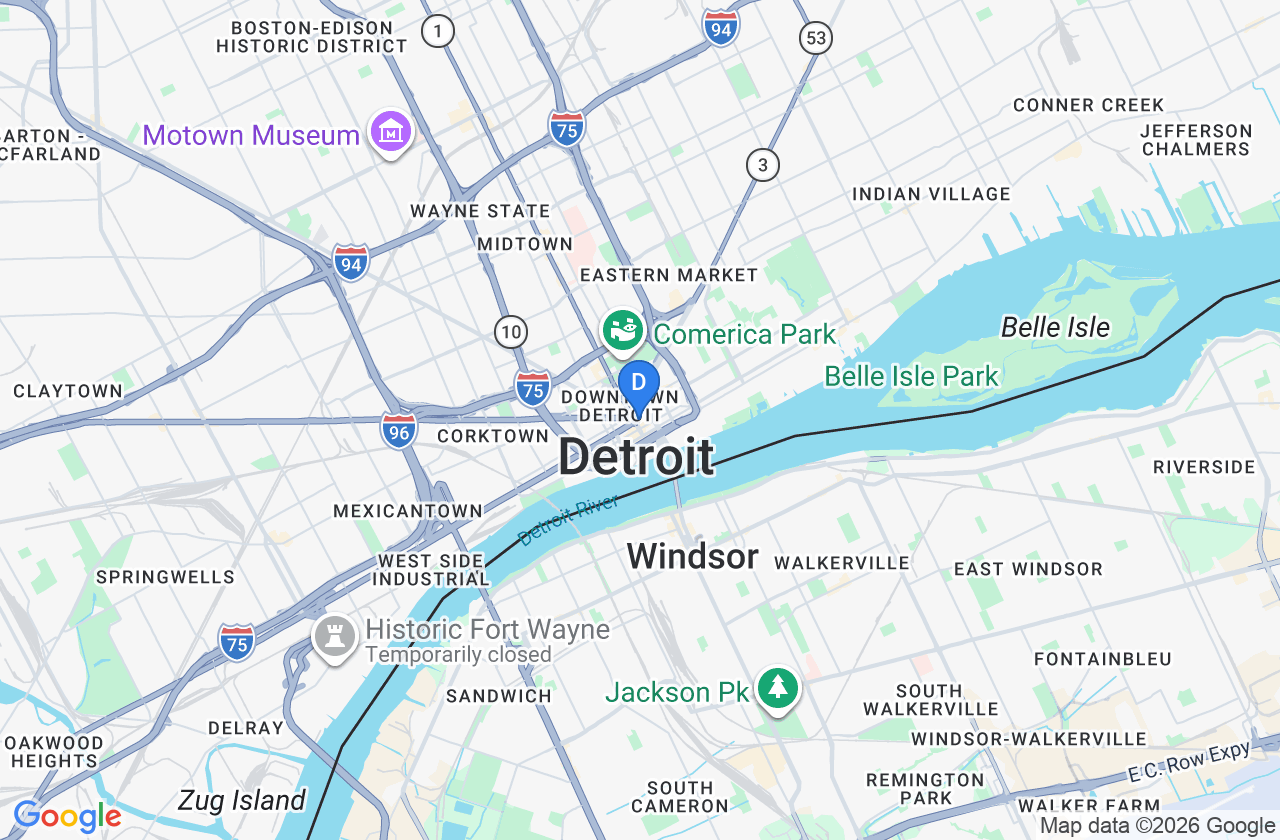
Market map preview
Detroit, MI dashboard with city, metro, and ZIP evidence labeled separately.
Lead ZIP
ZIP 48205
Rent proxy
City rent proxy: $1,283/mo
Rough max payment
$1,070/mo
Investor read
What this market means right now
- At current rent levels the property can support roughly $1,070 of monthly monthly payment while maintaining a 1.20× DSCR, suggesting modest cash-flow upside for single-family and small-multifamily investors; however limited price appreciation and low negotiation leverage read caution.
- Best fit when stabilized monthly payment can stay comfortably below $1,070.
This page gives you the city screen, the submarket watchlist, and the related article in one place so you can decide whether the market deserves more time and where to start first.
Execution posture
How the setup looks for acquire, refi, and hold
Acquire
Target lower-priced ZIPs (48205, 48234) with high rent-to-value; negotiate price discounts; secure DSCR financing at 1.20×
Refi
Consider refinancing if loan terms improve or if property value rises modestly
Hold
Hold properties that meet DSCR read and maintain rent-to-value >25%
Acquisition setup
What the current setup means for execution
High gross rent-to-value ratio (~15.5%) suggests attractive cash flow at current price levels.
- High gross rent-to-value ratio (~15.5%) suggests attractive cash flow at current price levels.
- Investor demand concentrated in core tracts may support price stability.
- Strong rental fundamentals - median rent $1,000 with 3% YoY growth - provide attractive cash-flow upside for DSCR-financed acquisitions.
- lower-priced ZIPs (e.g., 48205, 48234) deliver gross rent-to-value >25%, providing strong DSCR coverage and upside potential.
- Investor demand concentrated in core tracts supports price stability, allowing disciplined DSCR investors to capture cash-flow yields.
Application next step
Ready to move from this market screen into a real application?
If this market still fits your strategy, continue into Sphinx Capital's loan application. DSCRInfo will carry this market context into the application start.
If you apply with Sphinx Capital from this page, DSCRInfo may receive referral compensation. See disclosures
ZIP watch
Where the submarket edge is concentrated
ZIP 48205
48205
gross rent to value ratio
ZIP 48234
48234
gross rent to value ratio
ZIP 48213
48213
gross rent to value ratio
ZIP 48221
48221
gross rent to value ratio
ZIP 48201
48201
gross rent to value ratio
Next 90 days
How the setup could improve or deteriorate next
• Target properties in the lower-priced core ZIPs (e.g., 48205, 48234, 48227) where rent-to-value exceeds 25% and DSCR screens are comfortably met. • Use the 3-month supply window to negotiate price discounts; the 47% price-drop rate reads seller flexibility. • Monitor rent-growth trends - a 3% YoY increase is modest, so cash-flow improvements will rely on purchase price reductions rather than rent spikes. • Maintain a 1.20× DSCR minimum; max monthly payment of ~$1,070 aligns with current median rent, ensuring loan eligibility.
- city read is 15.5% with rough max monthly payment $1,070; metro acquisition pressure points to metro median listing price yoy at +1.27%; ZIP layer still shows 3 promising ZIP pockets.
- High gross rent-to-value ratio (~15.5%) suggests attractive cash flow at current price levels.
- Investor demand concentrated in core tracts may support price stability.
- Strong rental fundamentals - median rent $1,000 with 3% YoY growth - provide attractive cash-flow upside for DSCR-financed acquisitions.
- lower-priced ZIPs (e.g., 48205, 48234) deliver gross rent-to-value >25%, providing strong DSCR coverage and upside potential.
Acquisition leverage
flat · mediumHigh gross rent-to-value ratio (~15.5%) suggests attractive cash flow at current price levels.
Rent cushion
flat · mediumNegotiation leverage appears low (sale-to-list ratio 96% per Houzeo), limiting upside on purchase price.
Refi window
flat · mediumUse the dashboard as a first-pass read, not as a property-level decision.
Opportunity set
Why this market deserves attention
- High gross rent-to-value ratio (~15.5%) suggests attractive cash flow at current price levels.
- Investor demand concentrated in core tracts may support price stability.
- Strong rental fundamentals - median rent $1,000 with 3% YoY growth - provide attractive cash-flow upside for DSCR-financed acquisitions.
- lower-priced ZIPs (e.g., 48205, 48234) deliver gross rent-to-value >25%, providing strong DSCR coverage and upside potential.
- Investor demand concentrated in core tracts supports price stability, allowing disciplined DSCR investors to capture cash-flow yields.
Risk review
What could break the thesis
- Negotiation leverage appears low (sale-to-list ratio 96% per Houzeo), limiting upside on purchase price.
- Potential volatility in rent growth (only 3% YoY).
- High proportion of homes with price drops (47%) may read over-pricing or increased seller desperation, potentially leading to competitive bidding on the remaining quality units.
- Limited price appreciation city-wide (median home price only $99,606) reduces upside potential.
- High proportion of homes with price drops (47% per Houzeo) may read over-pricing and increase competition for quality units.
Geography & method
How to read this page correctly
ZIP watch rows can diverge materially from city or metro averages.
Geography warnings
- ZIP watch rows can diverge materially from city or metro averages.
- City-level Zillow data not directly available; values derived from Repit proxy.
- City metrics are not interchangeable with metro metrics; keep city, metro, and ZIP reads visibly separate.
- ZIP watch can diverge materially from city averages on both basis and rent.
Methodology notes
- Use the dashboard as a first-pass read, not as a property-level decision.
- Keep city rent/value proxies, metro acquisition pressure, and literal ZIP evidence visibly separate.
- Public DSCR estimates exclude taxes, insurance, vacancy, capex, lender overlays, and deal-specific rehab assumptions.
- Release dates and methodologies differ by source, so investor judgment should follow the metric-level labels rather than assume one unified feed.
- Home value and rent figures are sourced from Repit’s city-wide averages (2026).
Metric framework
What this public page is prioritizing
Typical Home Value (ZHVI) - Detroit, MI
mixed$99,606
Average home price in Detroit is $99,606.
Detroit, MI · May 1, 2026
Average Rent (ZORI) - Detroit, MI
mixed$1,283/mo
Concrete city rent basis used for DSCR public read (Average Rent (ZORI) - Detroit, MI).
Detroit, MI · May 1, 2026
City Gross Rent-to-Value Ratio
mixed1.29%
Derived from Average Rent (ZORI) - Detroit, MI and city home value for public first-pass only.
Detroit, MI · May 1, 2026
City Max monthly payment at 1.20x DSCR
mixed$1,070/mo
Derived from Average Rent (ZORI) - Detroit, MI at a 1.20x DSCR read floor for public first-pass only.
Detroit, MI · May 1, 2026
Reader Q&A
Top questions this page should answer
Is this market workable for a DSCR acquisition investor right now?
Selective yes: treat this as a ZIP-by-ZIP acquisition market, not a blanket citywide buy call; start with ZIP 48205 and only pursue deals that still clear conservative DSCR math.
What rough monthly payment boundary does the public quick read imply?
$1,069/mo using the current dashboard math. Average Rent (ZORI) - Detroit, MI: $1,283 (Detroit, MI). Gross Rent-to-Value Ratio - Detroit, MI: 1.29%.
Where should an investor start inside the market?
Start with ZIP 48205 (promising) and ZIP 48234 (promising). Typical home value $52,542 and avg rent $1,273/mo give a gross rent-to-value ratio of ~29% (annual rent $15,276 ÷ $52,542). This far exceeds the city average 15.5% and comfortably supports the 1.20× DSCR read (max monthly payment $1,060). Low price also provides upside for investors. basis: gross rent to value ratio.
What is the main thing that could break the thesis?
Negotiation leverage appears low (sale-to-list ratio 96% per Houzeo), limiting upside on purchase price.
What should an investor verify next before acting on this dashboard?
High gross rent-to-value ratio (~15.5%) suggests attractive cash flow at current price levels.
Freshness & method
How this page is built
This page combines a public rent proxy, a rough max monthly payment screen at 1.20x DSCR, local pricing and inventory pressure, and ZIP-level dispersion. It is built to help you decide whether the market deserves deeper deal work and where to start first.
Page updated
June 2, 2026
The current published market screen for Detroit, MI: start in ZIP 48205 before you widen the search.
Metric release window
Latest: May 1, 2026
Oldest on-page metric: May 1, 2026
Sources and method
This dashboard keeps city rent support, rough max monthly payment, local pricing pressure, and ZIP-level dispersion separate so you can decide whether the market is worth pursuing before deeper deal review.
Detroit, MI dashboard with city, metro, and ZIP evidence labeled separately.. Public pages summarize the sources and method behind each read without exposing the underlying research record.
Application next step
Found a market that still works for your DSCR criteria?
Continue into Sphinx Capital's loan application when you are ready to turn this public market screen into a real DSCR loan application. DSCRInfo will carry this market context into the application start.