St. Louis DSCR Market Snapshot – April 2026: Buy‑Box Opportunities in 63110‑63111 & 63115‑63116
A data‑driven guide for borrowers looking to acquire single‑family and small multifamily assets in St. Louis. The city’s low ZHVI, strong sale‑to‑list, and tight vacancy create a clear DSCR entry window in the South and North City buy‑boxes, while central corridor zoning uncertainty warrants caution.
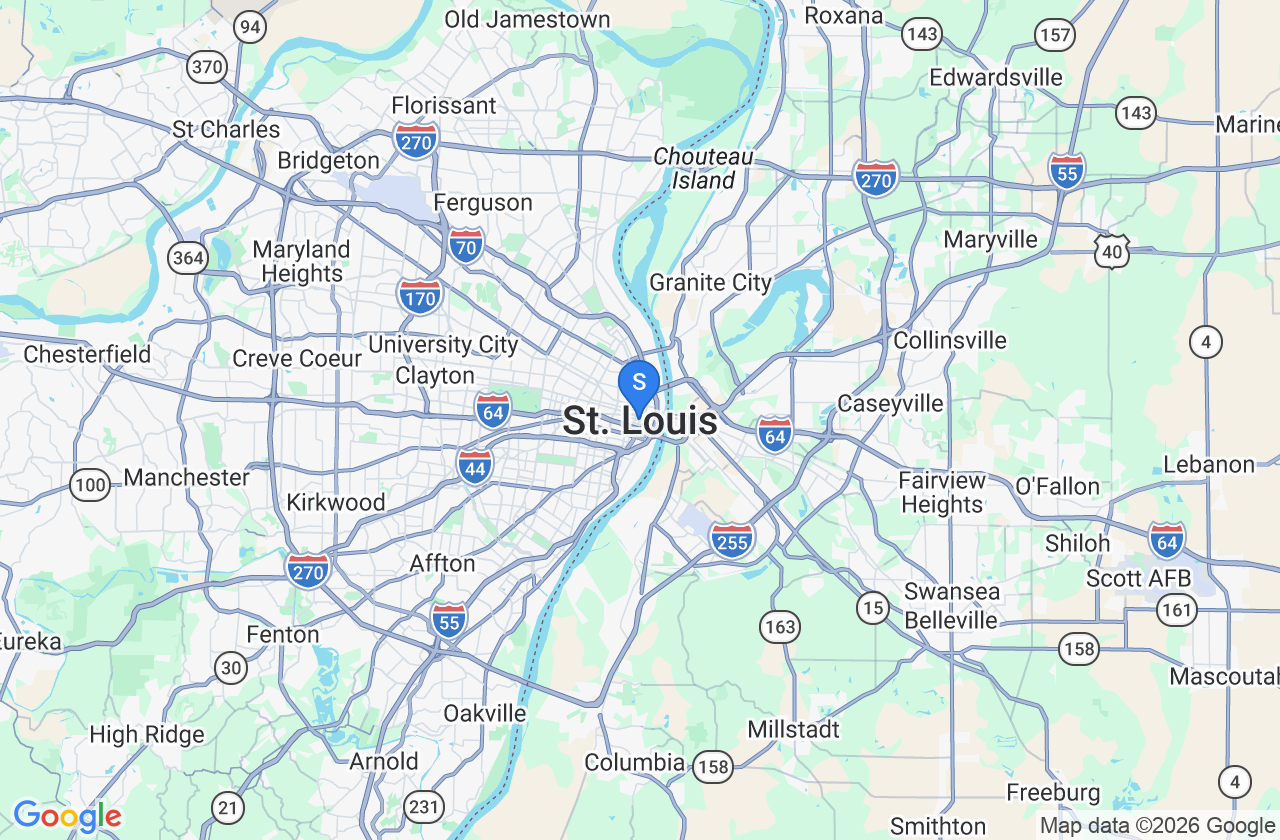
Live market dashboard
ST Louis, MO
Compare the live market screen with this article before you move into a property-specific scenario.
Investor takeaway
Acquire in 63110‑63111 and 63115‑63116 buy‑boxes; hold central corridor; monitor rent growth and cap‑rate shifts for refinance windows.
Clear DSCR Entry in St. Louis: Target 63110‑63111 & 63115‑63116
St. Louis’s housing market is a DSCR‑friendly playground for borrowers who can target single‑family and small multifamily assets under $150k. The city’s Zillow Home Value Index (ZHVI) sits at $177,270 (Jan 2026), giving a low entry point for cash‑flow financing. Properties are selling at 95.5% of asking and spend an average of 48 days on market, providing ample room for negotiation and price concessions. Rental momentum is strong, with +3.6% growth year‑to‑year, and vacancy remains tight at 6‑7.6%. Cap rates hover between 5.0‑6.5%, supporting a 1.20x DSCR floor when combined with a 0.6‑0.7% monthly rent‑to‑value proxy on sub‑$150k properties. These metrics together create a clear DSCR entry window in the South City (63110‑63111) and North City (63115‑63116) buy‑boxes, where compressed valuations and strong negotiation leverage converge.
The borrower edge is not that every St. Louis deal works; it is that the market now gives you enough inventory and pricing flexibility to be selective, pressure-test the rent ceiling quickly, and move only on the ZIPs where the DSCR screen still has room after real-world friction.
DSCR Reality Check: How the Numbers Stack Up
City rent proxy unavailable; ZIP‑level rent‑to‑value proxy applied. The rough max PITIA of the public quick-screen threshold is a screening ceiling before taxes, insurance, vacancy, and capex, not a payment target you can trust without more work.
Treat the public quick-screen threshold as a fast reject line. If a listing only works by stretching rent, assuming cleaner expenses than the local reality, or hoping the lender will bail out thin coverage, the St. Louis screen is already telling you to pass early.
The practical move is to use the city read to decide whether a listing deserves another look, then verify the rent ceiling at the ZIP and property level before you spend time on lender docs. Use the public dashboard as a screening and prioritization layer, not as parcel-level financing.
Acquisition Basis vs. Appreciation: Why the Buy‑Boxes Matter
St. Louis is a basis-first market right now, not an appreciation-first market. Selective acquisition posture in promising ZIPs with strong negotiation leverage.
That matters because the public DSCR screen only works when the buy basis leaves room beneath the public quick-screen threshold before real-world friction. If a deal needs rent stretch, unusually light expense assumptions, or future appreciation just to clear that line, the basis is already doing too much work.
95.5% sale‑to‑list, 48‑day DOM, $177k ZHVI, 6‑7.6% vacancy, +3.6% rent growth create a favorable DSCR environment. The opportunity is to use inventory and negotiation leverage to buy cleaner, not to assume future appreciation will rescue thin coverage.
The practical caution is simple: City rent proxy missing, zoning uncertainty in central corridor, and weak ZIP‑level rent data limit full DSCR validation. Fund St. Louis as a negotiation-and-rent-verification market, with first attention on South City Buy-Box (Dutchtown, Carondelet) and North City Buy-Box (Affton, Overland), rather than as a citywide appreciation bet.
Reconciling Signals: Workable Market vs. Cheap Market
The mixed read in St. Louis comes down to this: 95.5% sale‑to‑list, 48‑day DOM, $177k ZHVI, 6‑7.6% vacancy, +3.6% rent growth create a favorable DSCR environment. City rent proxy missing, zoning uncertainty in central corridor, and weak ZIP‑level rent data limit full DSCR validation.
Those conditions can both be true at the same time. The positive signal lives in basis, inventory, and seller posture; the caution lives in rent proof, submarket dispersion, and the fact that the city screen is only a evaluation layer.
That is why St. Louis is usable, but selectively usable. Screen the market at the city level, decide at the ZIP level, and only trust a deal after parcel-level financing confirms the rent ceiling still works in South City Buy-Box (Dutchtown, Carondelet) and North City Buy-Box (Affton, Overland).
In practice, keep Central Corridor (Downtown-Adjacent), South City Secondary (Lemay, Sunset Hills), and Properties selling at 95.5% of asking price enable 4-5% discounts in selective neighborhoods as backup sourcing areas and treat South City Tertiary (Soulard, Gravois) as caution territory unless a deal-specific rent edge is obvious.
ZIP‑Level Evaluate: Prioritize, Watch, and Caution
Start with South City Buy-Box (Dutchtown, Carondelet) and North City Buy-Box (Affton, Overland) because those areas are the cleanest current path to a workable DSCR screen.
- South City Buy-Box (Dutchtown, Carondelet): South city clusters show compressed valuations under $150k median, supporting gross rent-to-value screens at 0.6-0.7% monthly on single-family and 2-4 unit stock. Extended DOM (48 days) and 95.5% sale-to-list enable acquisition leverage for DSCR entry. Stable rental demand in established neighborhoods supports predictable cashflow. Why it screens: Rent-to-value proxy at 0.6-0.7% monthly on sub-$150k basis; acquisition leverage via 95.5% sale-to-list and 48-day DOM.
- North City Buy-Box (Affton, Overland): Affton and Overland neighborhoods identified in acquisition vector as fixer-upper pockets with lingering inventory and negotiation leverage. Sub-$150k median values support DSCR entry; balanced landlord-tenant laws in Missouri reduce regulatory friction. Moderate price growth (+2-4% forecast) aids predictable financing. Why it screens: Lower-basis buy-box with fixer-upper inventory; rent-to-value potential on sub-$150k SFH/2-4 units; acquisition concessions 4-5%.
- Central Corridor (Downtown-Adjacent): Downtown and central corridor ZIPs show mixed signals. While city ZHVI of $177k supports entry, emerging data center regulation framework (Feb 2026) restricts larger data centers to industrial zoning and establishes minimum distances from sensitive uses. Residential pockets near industrial corridors face zoning uncertainty. Rent data at ZIP level remains weak; recommend selective single-family evaluation only. Why it screens: Zoning uncertainty from data center framework; weak ZIP-level rent proxy; recommend caution on industrial-adjacent properties.
- South City Secondary (Lemay, Sunset Hills): Secondary south city ZIPs offer lower basis but show softer rental demand signals relative to primary south city clusters. Gross rent-to-value screening at 0.6% monthly is marginal for 1.20x DSCR at 5% rates. Acquisition leverage remains (95.5% sale-to-list), but rent softness limits upside. Recommend selective 2-4 unit evaluation only; avoid single-family unless sub-$120k basis. Why it screens: Marginal rent-to-value at 0.6% monthly; softer rental demand; lower acquisition concessions than primary south city.
- Properties selling at 95.5% of asking price enable 4-5% discounts in selective neighborhoods: Properties selling at 95.5% of asking price enable 4-5% discounts in selective neighborhoods. This is a buy-box proxy rather than a literal ZIP row.
Use South City Buy-Box (Dutchtown, Carondelet) and North City Buy-Box (Affton, Overland) for first-pass sourcing because those ZIPs currently offer the cleanest balance between basis and rent support.
Treat South City Tertiary (Soulard, Gravois) as caution areas unless a deal-specific rent edge clearly offsets the weaker posture.
Use the watch ZIPs as secondary sourcing areas only after you verify rent quality, tenant profile, and management risk.
Next 90 Days: Acquisition and Refinance Playbook
For the next 90 days, the job is to convert today’s seller leverage into cleaner basis before that window narrows. Target 63110‑63111 and 63115‑63116 buy‑boxes; focus on single‑family and 2‑4 unit properties under $150k; leverage 95.5% sale‑to‑list and 48‑day DOM.
- Source first in South City Buy-Box (Dutchtown, Carondelet) and North City Buy-Box (Affton, Overland) where the current screen is clearest.
- Keep Central Corridor (Downtown-Adjacent), South City Secondary (Lemay, Sunset Hills), and Properties selling at 95.5% of asking price enable 4-5% discounts in selective neighborhoods as secondary areas if pricing improves faster than management risk.
- Use the public quick-screen threshold as the fast reject line before taxes, insurance, vacancy, and capex.
- Watch acquisition leverage: Low ZHVI $177k supports DSCR entry for bottom-tier SFH/2-4 units
- Watch rent cushion: Lack of city rent proxy limits full DSCR rent-to-value computation
If inventory normalizes or the rent ceiling weakens, tighten the screen instead of expanding the buy box. The near-term edge is disciplined negotiation and rent verification, not waiting for appreciation to rescue thin coverage.
Execution Plan: From Screening to Closing
- Screen fast: use the public rent proxy and max-PITIA line to discard listings that already miss the DSCR floor before deeper financing.
- Verify locally: confirm rents, vacancy pressure, and tenant quality with fresh rent comps and at least one local manager read before you trust the city proxy.
- Finance deliberately: line up the 80% LTV, 5.75-6.25% loan path early so the acquisition screen matches the actual debt-service box you can close inside.
- Sequence the hold: buy in the priority ZIPs first, revisit watch ZIPs only after rent verification, then re-test the refinance case once DSCR clears the stronger post-close threshold.
Acquire posture: Target 63110‑63111 and 63115‑63116 buy‑boxes; focus on single‑family and 2‑4 unit properties under $150k; leverage 95.5% sale‑to‑list and 48‑day DOM. Refi posture: Monitor rent growth (+3.6%) and price appreciation (2‑4%) for refinance windows; consider refi when cap rates tighten or PITIA improves. Hold posture: Maintain current positions; watch for inventory tightening in spring and any zoning changes in central corridor ZIPs.
Public screening metrics only – city, metro, and ZIP signals are distinct and not interchangeable; no parcel‑level financing or lender overlays included.
DSCRInfo keeps the full research ledger internal on public-facing pages. Public articles disclose source classes, geography scope, methodology boundaries, and the linked market dashboard's dated screening context without publishing the raw source ledger.
Compare this read against the live ST Louis, MO dashboard before you move into property-level deal analysis.
Application next step
Ready to take this market into a live DSCR application?
Only move forward if the market and the property still fit your buy box. Continue into Sphinx Capital's loan application when the deal-level math still works. DSCRInfo will carry this market context into the application start.
If you apply with Sphinx Capital from this page, DSCRInfo may receive referral compensation. See disclosures